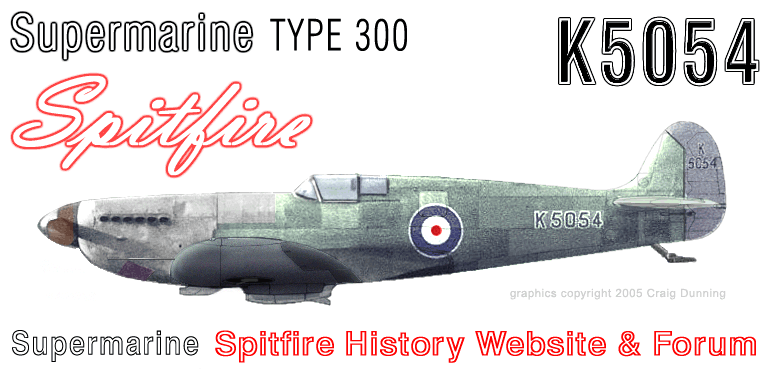
K5054: the Spitfire prototypeThe Spitfire represents the pinnacle of inline-piston engined interceptor design, and has become a timeless classic that other aircraft are compared to. This website is devoted to the Supermarine Spitfire Type 300 prototype - serial number K5054 - and the production aircraft that followed her.
Strap on a Spitfire! |
Site menu -Upd. Spitfire VARIANTS Upd. Spitfire NEWS articles New Spitfire BOOKS and publications Upd. Spitfire RESOURCES links Upd. Spitfire MOVIES, footage and documentary Spitfire - The Legend Lineage - Supermarine S series Lineage - Supermarine Type 224 Type 300 - Birth of a Thoroughbred K5054 - Type 300 SPECIFICATIONS K5054 - Spitfire ARTWORK K5054 - Surviving wreckage Spitfire Blooded "Achtung, achtung Schpifeur" Legacy of the R engine Spitfire - last of the many VN496 70th Anniversary of K5054 maiden flight Spitfire - documentary sources ArtemisProgram.com news & moon landing sources About | Help | Contact - "Achtung, achtung Schpifeur!" |
 |
Spitfire: the legend
"The Spitfire was a thing of beauty to behold, in the air or on the ground, with the graceful lines of its slim fuselage, its elliptical wing and tailplane. It looked like a fighter, and it certainly proved to be just that in the fullest meaning of the term. It was an aircraft with a personality all of its own - docile at times, swift and deadly at others - a fighting machine 'par excellence'. One must really have known the Spitfire in flight to fully understand and appreciate its thoroughbred flying characteristics. It was the finest and, in its days of glory, provided the answer to the fighter pilot's dream - a perfect combination of all the good qualities required in a truly outstanding fighter aircraft. Once you've flown a Spitfire, it spoils you for all other fighters. Every other aircraft seems imperfect in one way or another."
|
 |
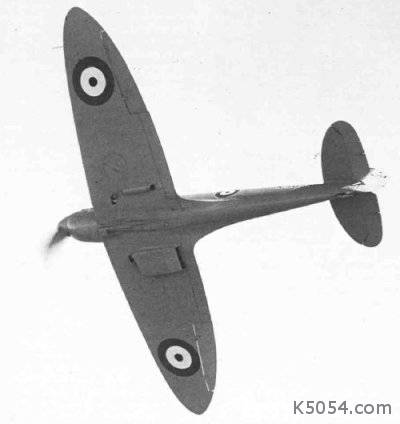
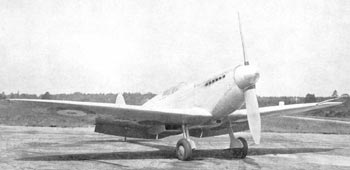
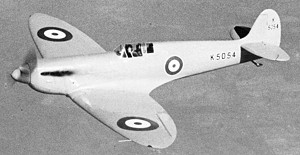
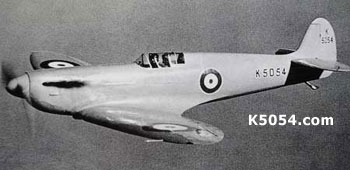
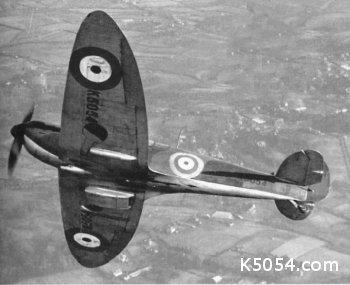
K5054 showing off her unmistakeable eleptical wing profile in flight. The prototype Spitfire is distinguishable here by the wheel covers that completely cover the wheel wells, and the original oil cooler design. |
Thoroughbred lineage: Supermarine S airframes and Rolls-Royce R engines
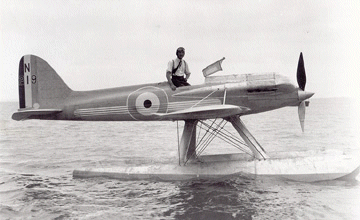 Supermarine S5 |
|
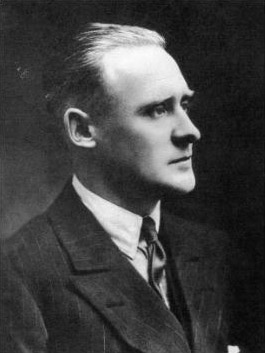
Designed by Supermarine's brilliant chief designer Reginald J. Mitchell, the Spitfire was a thoroughbred design whose lineage can be traced back through Mitchell's S-series racing floatplanes of the late 1920's that competed in the Schneider Cup seaplane contests after the first world war. These popular seaplane races were equivalent to modern-day Formula 1 car races, and attracted aviations elite designers and pilots. Seaplane racing spurred phenomenal advances in aerodynamics and engine development between the two world wars. |
|
Advanced aerodynamics and airframe engineering were mated to unbridled horsepower when Henry Royce developed the Rolls-Royce R engine for Mitchell's new S.6 floatplane, and the union secured the Schneider Trophy for Britain in 1931. The R-type engines were the latest development in high-powered aero engine design, producing over 2500 hp for short periods running special fuels. Mitchell's Supermarine S.6B was one of the major technical achievements in British aviation between the two world wars, and set an absolute speed record of 656 km/h (407.5 mph) on 29 September 1931, alarmingly almost twice the speed of Britains then fastest service fighter aircraft, the Hawker Fury. |
|
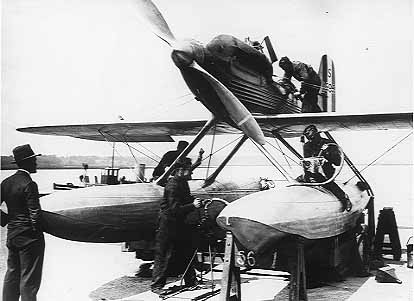 This Supermarine S6B raised the world absolute speed record to 656 km/h (407.5 mph) in September 1931. |
|
Supermarine S6B general characteristics [more: Legacy of the R series engines] |
|
Supermarine Type 224The first Supermarine 'Spitfire' - the Type 224 first flown in 1934 - didn't satisfy expectations. After their success with the the high speed S-series of monoplane racers, Mitchell's team thought that designing a fighter to Air Ministry specification F.7/30 would be a relatively simple affair. The design was also hampered by the evaporative cooling design of the 660 horsepower Rolls-Royce Goshawk engine. The fighter contract was eventually awarded to the Gloster SS 37 (Gladiator) biplane because of it's climb rate advantage over the monoplane designs. In 1934 the Supermarine 224 design was subsequently cleaned up and succesive specifications sought from the Air Ministry to cover the refinements, eventually leading to the superb Type 300 that followed.
|

|
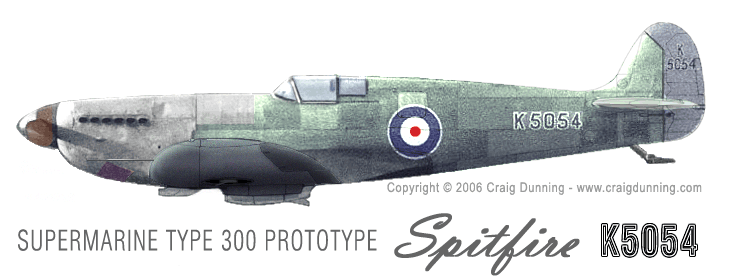
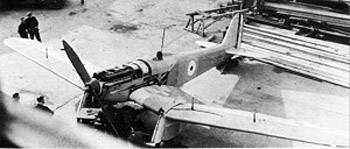
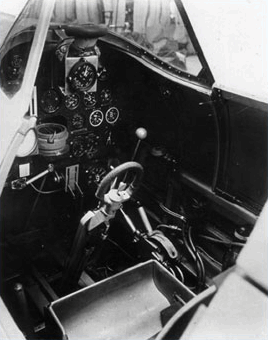
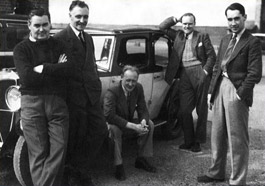
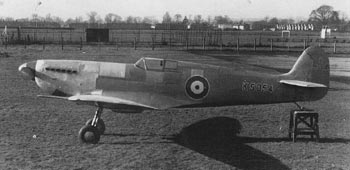
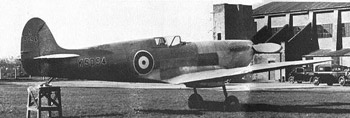
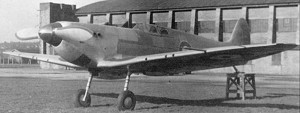
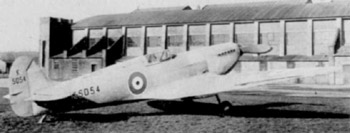
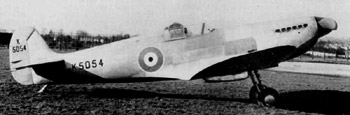
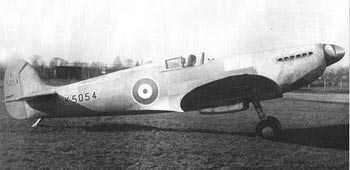
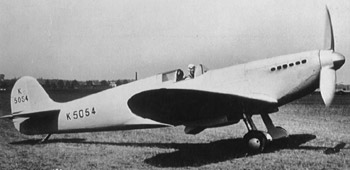
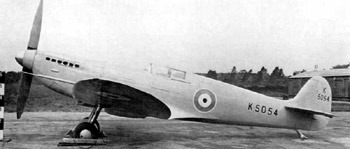
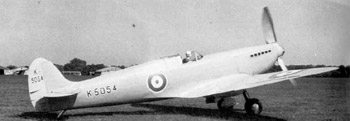
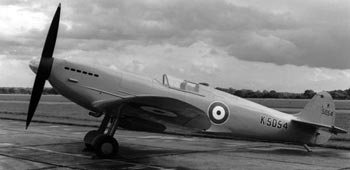
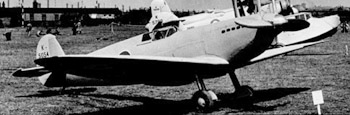
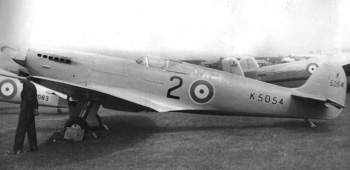
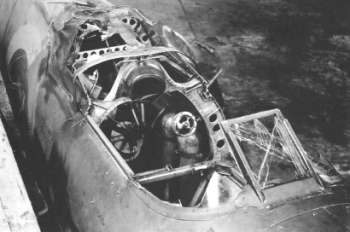
Supermarine Type 300K5054: birth of a thoroughbredK5054 was the Air Ministry registration given to the (Vickers) Supermarine Type 300 prototype. Construction of K5054 began in December 1934 and her maiden flight was on 5 march 1936 at Eastleigh_Aerodrome (later Southampton Airport) piloted by Vickers' chief test pilot Joseph "Mutt" Summers. Minor modifications and refinements were made to the Type 300 as suggested by flight trials over the following months, and K5054 emerged as the pattern for the production version of the now legendary Supermarine Mk.I Spitfire. The final cost of K5054 totalled U+20A4 20,765. The Air Ministry paid U+20A4 12,478 and Rolls Royce paid U+20A4 7,500, leaving Supermarine's final cost for building the Type 300 prototype Spitfire at U+20A4 787. Britain's Air Ministry were so impressed with this new interceptor or 'killer-fighter' that prior to the full test programme being completed, they issued a contract on 3 June 1936 for 310 Spitfires. Whilst Mk.I production got underway, K5054 was further refined and modified to become the pattern for the sucessive Mk.II and Mk.III Spitfires. On 22 March 1937 during performance trials at Martlesham Heath, K5054 suffered an oil-pressure failure and was damaged during a belly landing. On 4 September 1939 at the Royal Aircraft Establishment at Farnborough, K5054 nosed over on landing and whilst the fuselage was left intact, the cockpit was crushed. Pilot F/Lt White died of injuries caused when the aerial mast mounted atop the fuselage behind the pilot, was pushed down through the fuselage pulling the Sutton seat harness back with such a force that he bent the back of his seat on impact with it. A modification was later made to the run of the cable that anchored the Sutton seat harness to the rear of the fuselage in production aircraft. The accident that destroyed K5054 occurred the day after Britain declared war on Germany. Spitfire blooded: "Achtung, achtung Schpifeur"Spitfires were blooded on a pair of unfortunate Hurricanes of 56 Squadron - shot down by 74 Squadron's Spitfires in a friendly fire incident over the river Medway in Kent on 6 September 1939, in what became known as the Battle of Barking Creek. Spitfires shot down their first enemy aircraft on 16 October 1939 when Luftwaffe Junker 88s of 1/KG 30 fell to the guns of Squadron Leader Stevens of 603 Squadron over the Firth of Forth, Rosyth. By 1940, Spitfires were fighting in the skies over France and Belgium while the allied armies crumbled under the well orchestrated German blitzkrieg. In May 1940 the British Expeditionary Force, having lost most of their equipment in a fighting retreat, fell back to the French port of Dunkirk to await their fate. Flights of Spitfires from southern England patrolled the skies approaching the Dunkirk pocket in an effort to keep the Luftwaffe at bay whilst Royal Navy, merchant marine, and civilian vessels working under the codename Operation Dynamo evacuated the remnants of Europe's shattered armies to England, from where it was hoped they might fight another day. Invasion imminentBy June 1940 continental western Europe had fallen. Britain's newly appointed wartime Prime Minister Winston Churchill now roused the British people in a stubborn yet seemingly futile resistance against the odds.
Hitler readied his forces for the invasion of England. Luftwaffe air supremacy over the landing zones was vital for the invasion to succeed. The RAF was to be either destroyed or pushed back from its coastal bases in southern England so that the landings could take place. The RAF had also been seriously mauled supporting the allied armies on the continent. What aircraft remained was due to the foresight of Air Chief Marshal Sir Hugh Dowding refusing to send any more squadrons to France, and the british aircraft factories labouring to replace daily loses. The stakes were high as the fate of the world hung in the hands of a few hundred young allied pilots. It was said in America that Britain would last no more than six weeks before capitulating. Operation Eagle - The Battle of BritainOver the coming months Fighter Command pilots flying Spitfire Mk.I's and Hawker Hurricane's found themselves pitted against the cream of Hitler's undefeated Luftwaffe veterans in a desperate fight to protect their vital forward airfields, radar stations and aircraft factories. By Autumn 1940 the massed daylight strikes against Britains front line defences had eased. On September 15, the largest air battle took place and Churchill famously asked "What other reserves have we?" to which Air Vice-Marshal Park answered "We have none". Fighter Command had comitted all its reserves to the air battle that day but the outnumbered pilots gave no quarter and over the following days the tide began to turn. Hitler had been rebuffed for the first time, but a strategic terror campaign that became known as The Blitz soon followed. Massed aerial night bombing of English population centres was hoped to weaken civilian resolve and topple the wartime government, but as the weeks dragged on and the RAF continued to fight, Hitler postponed the invasion and re-focused his attention on the upcoming invasion of Russia. The massed aerial battles fought in the skies over the English countryside by 'the few' pilots in the summer of 1940 had saved Britain from invasion in her darkest hour and created a legend; the graceful but deadly Spitfire became the symbol of the most important British victory in history.
|
|
|

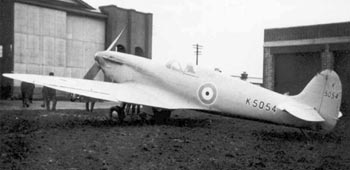
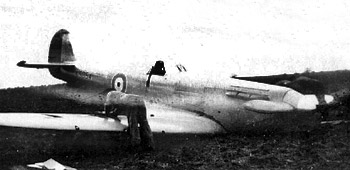
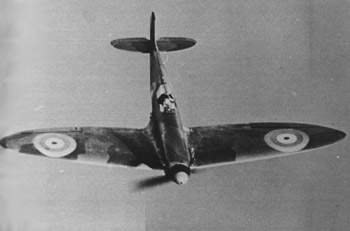
|
Rolls-Royce: Legacy of the R series engines
|
|
|
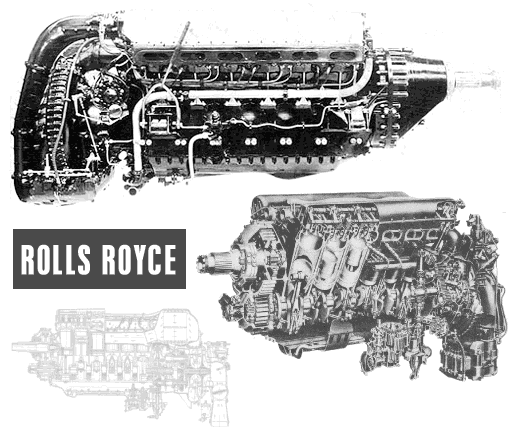
Ongoing research and development by Rolls-Royce based on experience learnt with the R series of racing engines in the early 30s paved the way for the legendary line of smaller Merlin engines that powered many allied aircraft during WWII, including the Supermarine Spitfire, North American P-51 Mustang, Hawker Hurricane, De Havilland Mosquito and the Avro Lancaster heavy bomber. The Rolls-Royce Griffon engine was a direct development of the Kestrel - Buzzard - R-Series progression that powered the S6B to fame in 1931, and after 10-years of development the engine finally entered service with the RAF towards the end of the war. Ironically, late model Spitfires powered by these Griffon engines could finally exceed the world speed record set by their ancestor, the S6B in 1931! |
|
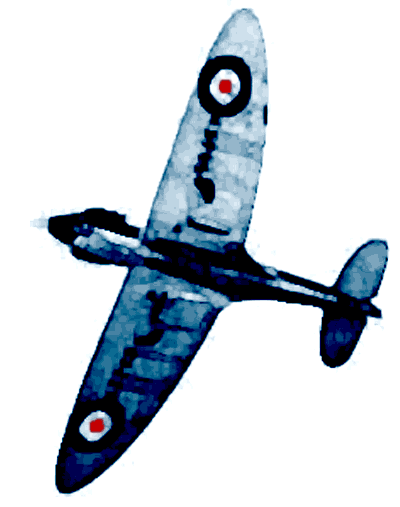
VN496 : the last SpitfireOn the 20th February 1948, almost twelve years from the prototype's first flight, the last production Spitfire, an F Mk 24 (VN496) left the production line. Some 22,759 Spitfire's and Seafire's were built over a 10 year production run during which time Reginald Mitchell's classic design evolved almost beyond recognition into 24 different marks. The Spitfire was the worlds only fighter aircraft in series production before, during, and after the second world war, and served with many of the worlds airforces well into the 1960's!
|
|
|
|
Surviving pieces from the Spitfire Prototype K5054
|
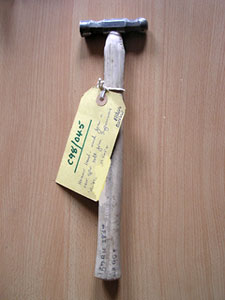
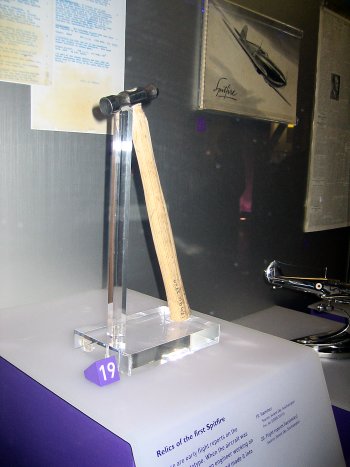
The only 'surviving piece' of K5054 appears to have been a wing bolt that an engineer kept and re-manufactured into a sheet metal workers hammer head. This valuable piece of aviation history is now in the custody of Solent Sky, Southampton, and can be seen on display at the Spitfire Exhibition at the Science Museum in Kensington, London.
|
|
The Solent Sky 'wing bolt Hammer Head' as seen on display at the Spitfire Exhibition - Science Museum in Kensington, London. |
|
NEWS
NEW - Latest Spitfire NEWS - updated October 2008)
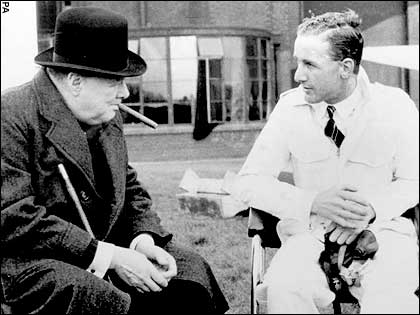
Alexander Adolphus Dumfries Henshaw MBE (7 November 1912 - 24 February 2007)Alex Henshaw passed away at home on Saturday February 24th 2007 aged 94. He was one of the great aviation pioneers, air race master, and with a record-breaking trip from the UK to Cape Town and back. Alex was renowned as the chief test pilot for Vickers-Armstrong at the Castle Bromwich aircraft factory, and a master display pilot of the immortal Spitfire. Henshaw volunteered for service with the RAF during World War II, but instead became a test pilot for Vickers Armstrong. He starting with Wellingtons and Walruses at Weybridge. He did not enjoy the work, and was on the point of leaving when Jeffrey Quill invited him to test Spitfires in Southampton. In June 1940, he moved to the Castle Bromwich aeroplane factory in Birmingham, taken over by Vickers after poor production results by the Nuffield group. He was soon chief test pilot. The factory built over half of the total output of Spitfires ever made, and 350 Lancaster heavy bombers. Henshaw tested both, leading team of 25 others. The job was essential, to ensure that faults were detected before aircraft were delivered to the font line, but was also dangerous: two of his team were killed testing new aircraft. Henshaw survived many forced landings, and a catastrophic crash between two houses in Willenhall in July 1942 which destroyed the aircraft. It is estimated that Henshaw flew 10% of all Spitfires and Seafires, testing up to 20 aircraft a day in often foggy conditions. He would also demonstrate the Spitfire to visiting dignitaries, such as Winston Churchill, and once flying the length of Broad Street in Birmingham at low level. He was the only pilot known to perform a barrel roll in a Lancaster bomber, a feat that was considered reckless and impossible due to the aircraft's size and relatively low speed. He was awarded the MBE for his wartime service. |
Henshaw chatting with prime minister Winston Churchill about the Spitfire.
|
NEWS : 70th anniversary of K5054 maiden flight
Here are some BBC news links concerning celebrations to mark the 70th anniversary of K5054 's maiden flight at Eastleigh Aerodrome on 5th March 1936.
We are eagerly awaiting the upcoming 75th anniversary in 2011, at what will hopefully be the soon re-named 'RJ Mitchell International Airport'.
|
NEW - Latest Spitfire NEWS - updated October 2008)
Documentary Sources
- Official Specifications: F.7/30, F.37/34, F.10/35, F.16/36 etc.
-
The Illustrated Encylopedia of Aircraft (18 Volumes)
Published by Orbis as weekly editions in the 1980's -
The Spitfire Story
by Alfred Price
Cassel, Revised Second edition 1995 -
Spitfire - A Documentary History
by Alfred Price FRHistS
Second Impression 1978
-
Spitfire - A Complete Fighting History
Republication combining: Spitfire at War (Pub.1974) & Spitfire at War 2 (Pub.1975)
by Alfred Price
Promotional Reprint Company, Reprint 1997 - Fighters 1914 - 1945
by Bill Gunston
- Reach For The Sky - The Story of Douglas Bader C.B.E, D.S.O, D.F.C
by Paul Brickhill Second Impression February 1957
- The Hardest Day - The Battle of Britain 18 August 1940
by Alfred Price Reprinted 2002
- The Sky Suspended - The Battle of Britain May 1940 - April 1941
by Drew Middleton
Secker & Warburg (London), First Edition 1960
- Official specifications, documents and sources yet to be listed...
See also - Spitfire BOOKS - added Oct 2008
About this website
My aim is to publish surviving documents, images and personal memories relating to the first Spitfire - K5054.
If you have any interesting material concerning K5054 or Spitfires in general please contact me.
Please also contact me if I have published an image that you hold copyright over and I will give full credit.
Link to this Website
Please feel free to host a link to our site using one of the links or banners below
K5054 - The Supermarine Spitfire Prototype


Email
Please e-mail: webmaster @ k5054.com (please remove spaces)
Sorry to anyone trying to access the forum - I closed it in October 208 due to hacks and attacks.
Thank you for visiting - please return soon.